Teaching Philosophy
"Just draw what you see!"
This phrase has echoed through drawing academies and studios since the Renaissance. It sounds like common sense, but it is a deceptive imperative. It conceals deep assumptions about how we see, while suggesting that drawing is a simple, passive, mechanical recording of visual data.
After forty years of practice, including twenty years of teaching, I understand how the nature of our perceptual system makes drawing difficult. I prefer to think of drawing as a translation; it is the process of taking a chaotic, three-dimensional world and translating it into the language of lines, shapes, and colors. Translation involves having an intention, making choices and is anything but a passive process.
Master or Servant? The Role of Photography
To quote Walter Richard Sickert: "The use of photography, like alcohol, should be permitted only to those who do not need it."
Many students become competent "copyists" of photographs, but this passive process doesn’t prepare them for the challenge of drawing from reality. While I use photography in my own practice, I do so as its master, not its servant. Years of working directly from nature earned me that freedom; nature provides a visceral space for discovery that a flat image simply cannot replicate.
From "Sink or Swim" and the 35-hour week to Threshold Concepts
In the 1980s at the Falmouth School of Art, I practiced drawing with obsessive rigor—often 35 hours of life drawing classes a week. It was a "sink or swim" education. Tutors taught by example, but rarely by direction. I learned most of what I know about drawing in the life room, but the process was inefficient, marked by long, frustrating plateaus interrupted by sudden, exciting advances.
When I returned to Falmouth as a lecturer twenty years later, funding cuts had stripped students of the luxury of time and resources that I had benefited from. As a keen, largely self-taught amateur musician, I knew there was a highly developed pedagogy for playing the piano or violin. But where was such a pedagogy for drawing?
I reflected on my own learning process, analyzed my current practice, and observed exactly where students struggled.
The Digital Advantage
I integrated the "Threshold Concepts" framework—identifying the specific "bottlenecks" where most students get stuck. By targeting these gateways with digital presentations and tailored strategies, we bypass the years of frustration I experienced in the '80s. In each presentation visual language is contextualized within the history of art.
The 2020 pandemic forced my teaching online, which I initially viewed as a compromise. Instead, I discovered a breakthrough: Digital Draw-overs. Using a tablet, I can provide feedback with a precision impossible in a crowded studio. By drawing over your work in real-time, I can pinpoint a structural error or a tonal failure without touching your physical paper, leaving you free to make the correction yourself.
The Method: A Restricted Language
There is no single way to draw. For this reason, I don’t teach a specific style. Instead, I provide a "toolbox" that enables you to draw in a way that reflects your unique interests and responds authentically to your subject.
Drawing becomes overwhelming when we try to do everything at once. My method breaks the process into five distinct disciplines to remove the "smokescreen" of complexity and to focus on navigating the Threshold Concepts:
The Discipline of Line: We strip away shading to abstract and simplify the subject. This enables control over proportion and structure, and utilizes gestural and rhythmic drawing to capture life and movement. See Fig 1.
The Discipline of Composition: We move beyond mere description to concentrate on image-making. You will learn to see the image as a whole rather than a collection of parts, understanding how composition is central to expressing a personal perspective or feeling about your subject. See Fig 2.
The Discipline of Tone: We set aside outlines to concentrate entirely on tonal values and relationships, observing how to create an atmosphere rather than looking at objects. See Fig 3.
The Discipline of Form: We tackle the counter-intuitive challenge of suggesting volume and surface, creating a tangible sense of solidity and weight. See Fig 4.
The Discipline of Color: We begin with color-collage to learn to think in relationships, before moving on to mixing color—first with dry media, and then with paint using a restricted palette of process primary colours plus white. See Fig 5.
Each of these disciplines offers a pathway for developing the expressive and communicative power of your work. Once mastered, we can go even further, synthesizing these different languages to unlock entirely new creative possibilities.
The Subject: Finding the Beautiful or Sublime in the Everyday
After decades spent in the life drawing studio as both student and teacher, I can confidently say that the challenge of drawing a naked body is essentially no different from a still life or a landscape. The difficulty of the "figure" is primarily our own domineering preconceptions of what a body should look like, rather than how the body in front of us actually looks.
Marketing often separates art classes into "Seascapes" or "Portraits," but these categories are arbitrary and make us blind to other subjects. While a cloud or a wave moves and a still life sits still, the fundamental formal challenge remains identical.
Following Paul Cézanne’s advice, I encourage students to find subjects in their immediate surroundings: the view from a window, a collection of personal items, or a loved one reading. To see your everyday environment as a potential subject for art is a creative act in itself.
The Goal: Creative Independence
I provide the "scaffolding" of structured exercises, but as you progress, I dismantle it. My goal is not to make you dependent on my eye, but to give you the independence and confidence to trust your own.
Learning to draw and paint should be a philosophical journey - one that opens our minds and eyes to the beauty and mystery of the visual world around us.
Connect with Me
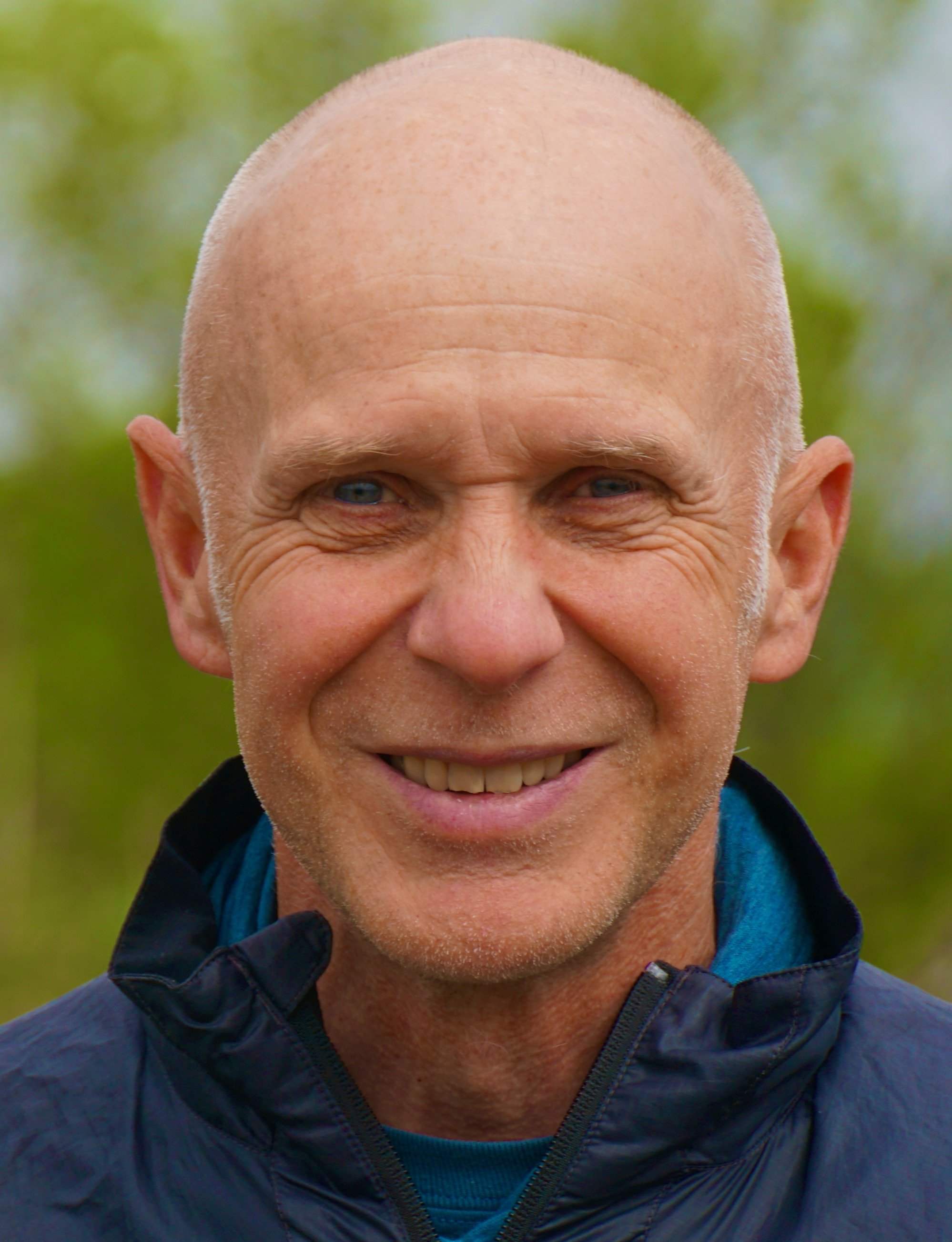
If you are interested in private lessons - either online globally, or in person if you are in the Madrid area - you can arrange a free 30 minute consultation via the link below or via my Contact page.
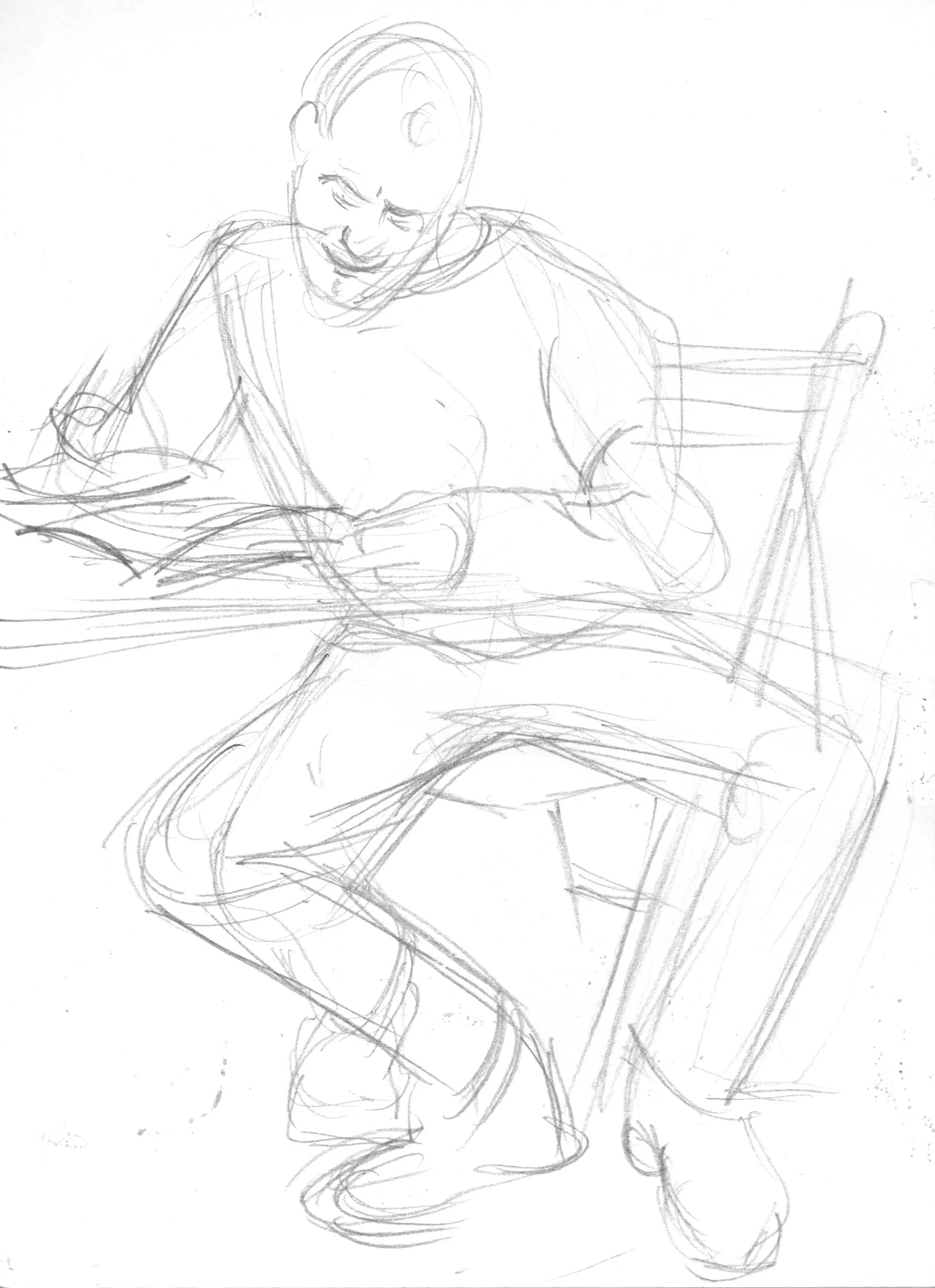
Fig 1. A sketchbook page showing a rapid, gestural sketch in pencil capturing the figure and the characteristic posture in broad, simple lines, light lines suggest changes in posture giving it a kinetic feel.
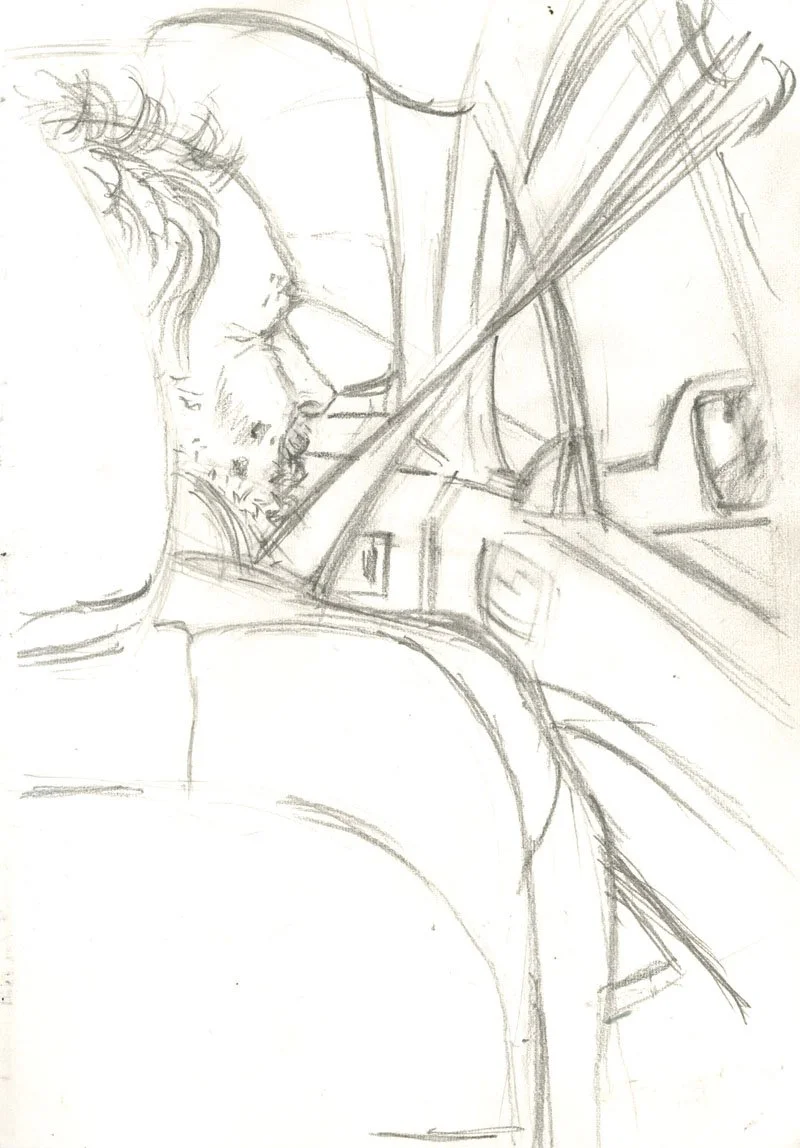
Fig 2. A composition line drawing concentrating on framing the profile view of a friend during a car journey. The strong vertical of the edge of the seat and the column of the windscreen anchor and frame the figure. The area of dense mark-making in the head is balanced by large voids to the left and below.
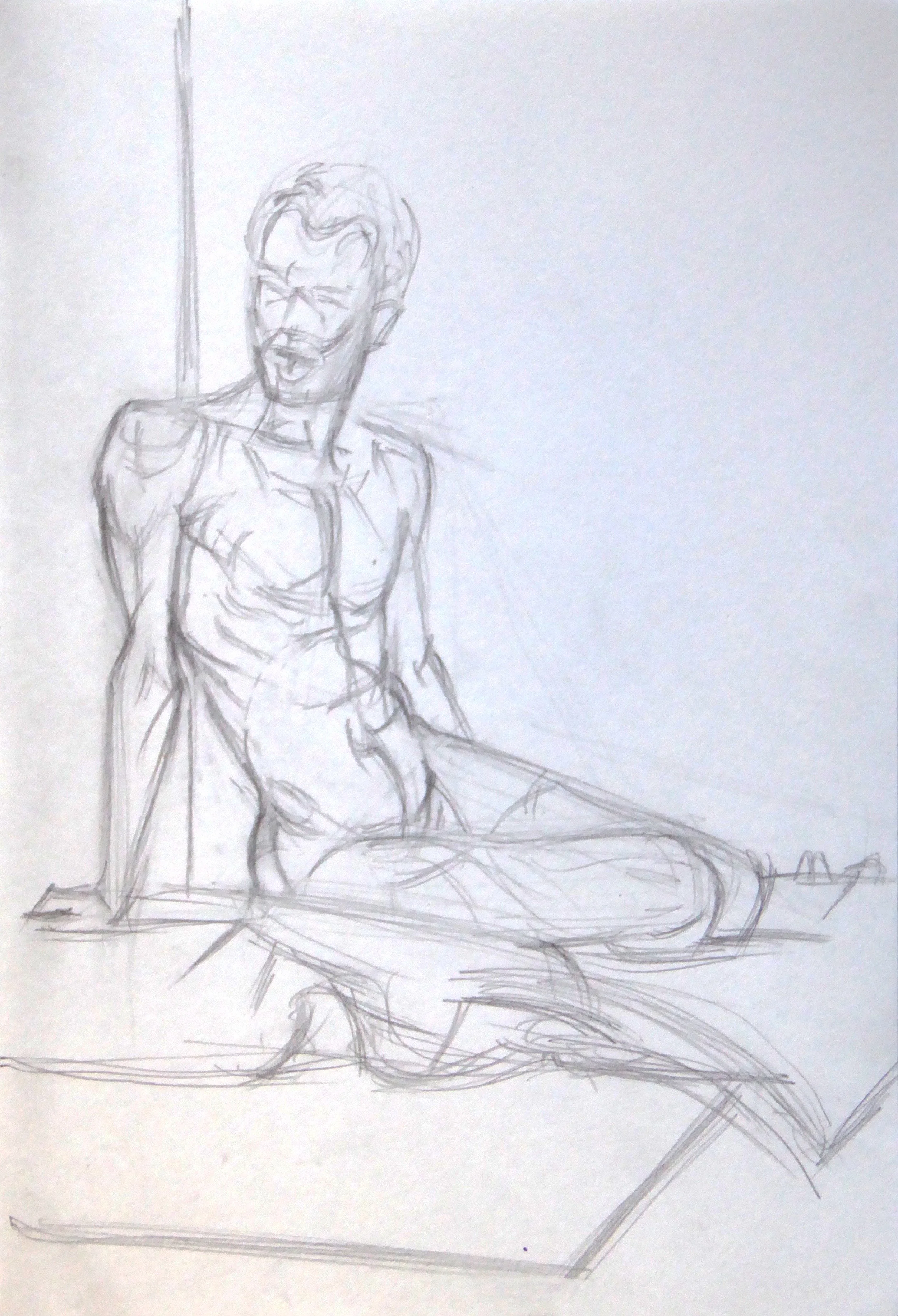
Fig 3. A line drawing using varying weight of line to delineate changes in light and shade, not to suggest light, but to articulate changes in the planes of the arms, torso and head, conveying a skeletal sense of structure.
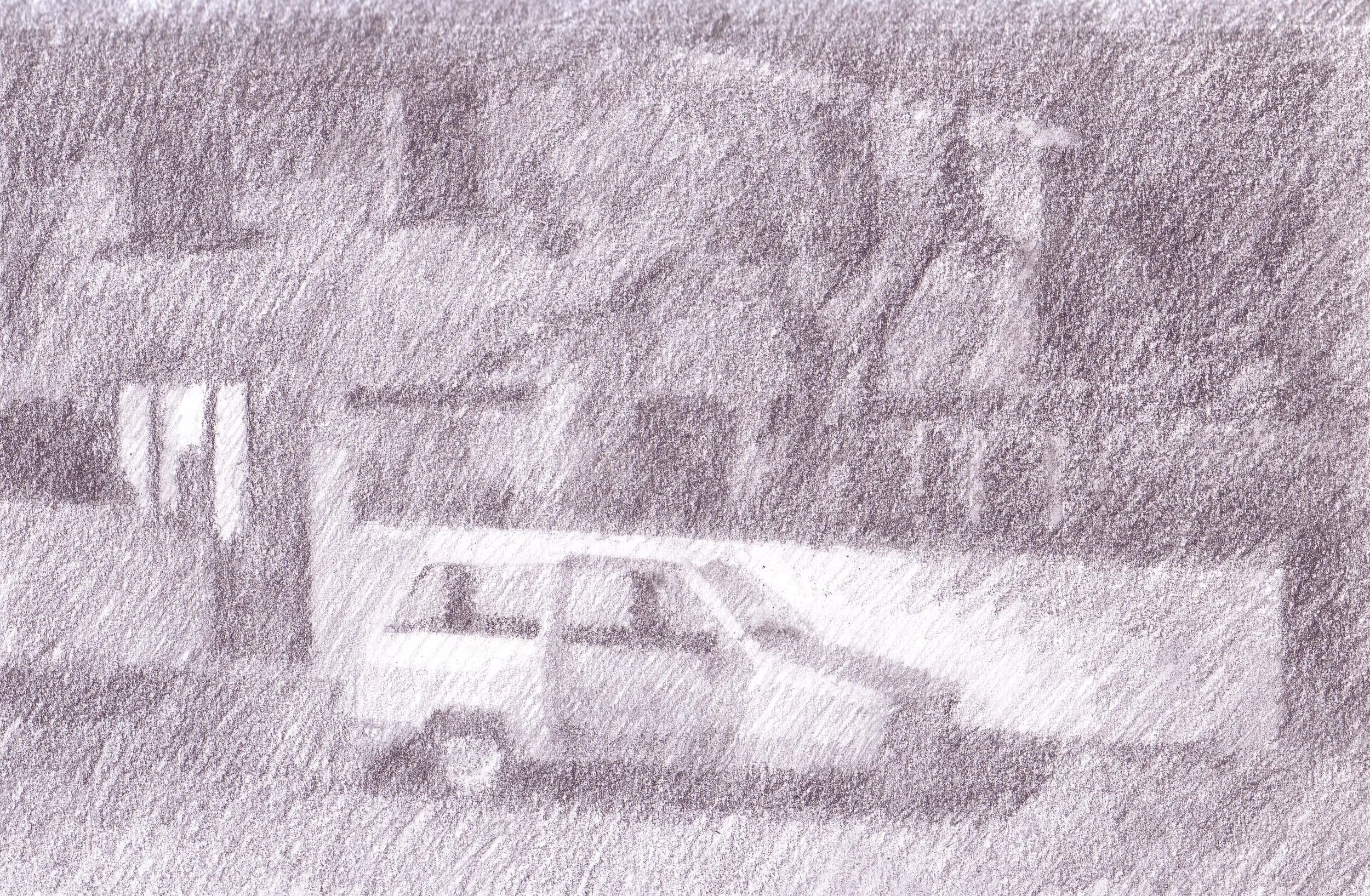
Fig 4. A tonal drawing of an urban street view at night. The absence of defining outline and relying purely on changes in tone to describe the entire scene creates an atmosphere of mystery.
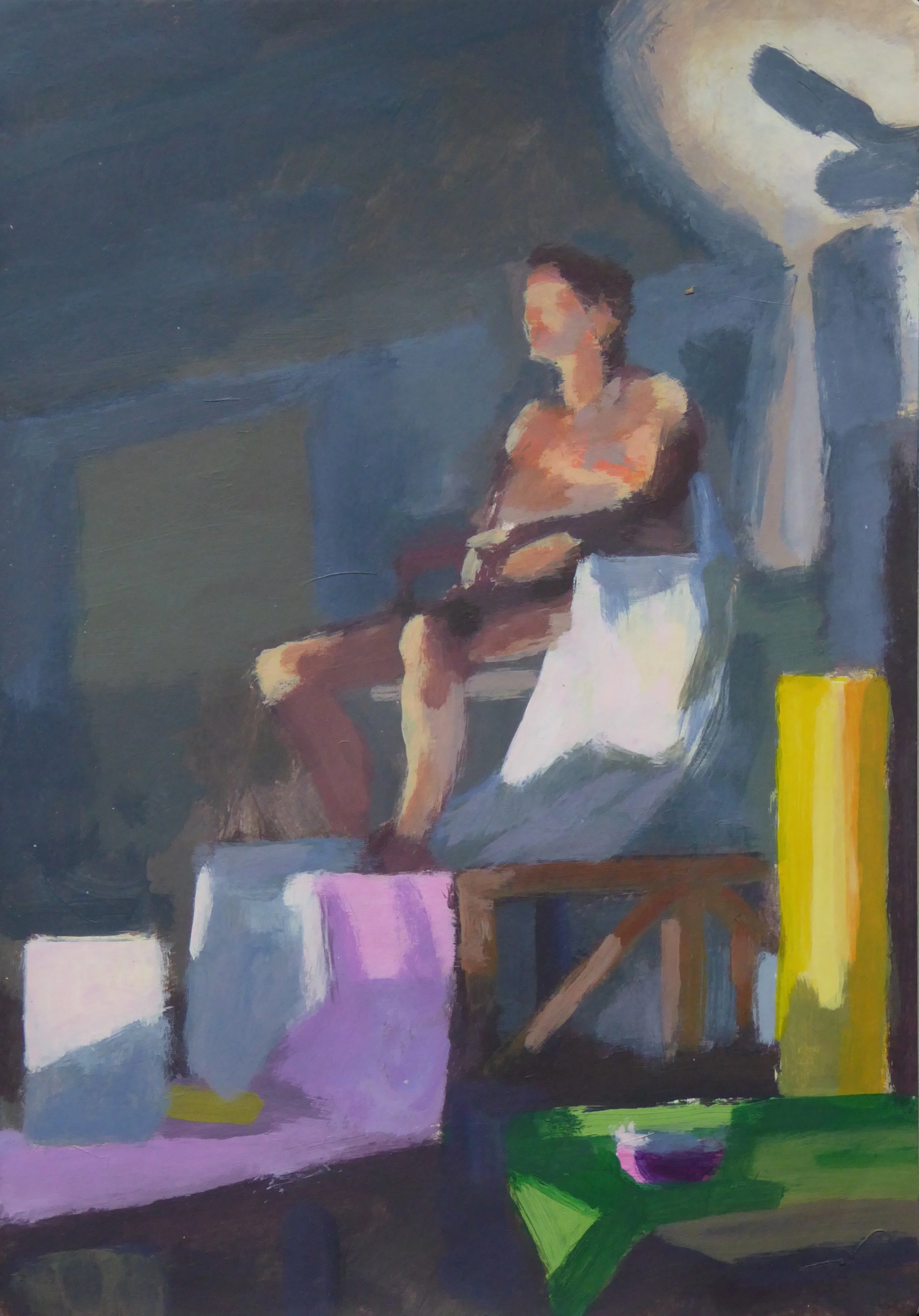
Fig 5. A colour study in acrylic using the 3 process-primary colours plus white. The composition is entirely governed by the play of light and shadow whilst the dominant grey tone is made with the same primary colours used for the brightest colours, this ensures a harmony of colour. The figure is treated simply, as part of the architecture of the image.